
No-Spall Glass-Clad Polycarbonate
Thompson Innovative Glass manufactures several Bullet-Resistant (also sometimes called Bullet Proof) options under its Defender® line.
- UL Levels
- 2
- 3
- 4
- 5
- 7
- 8





No-Spall, Bullet-Resistant Glass
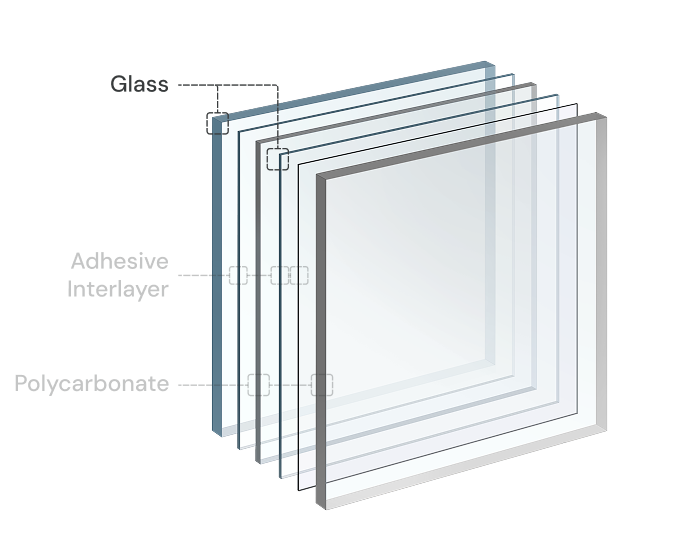
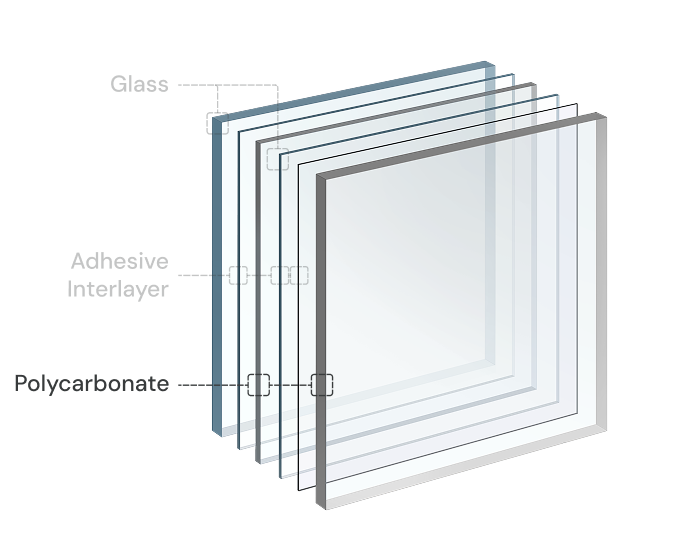
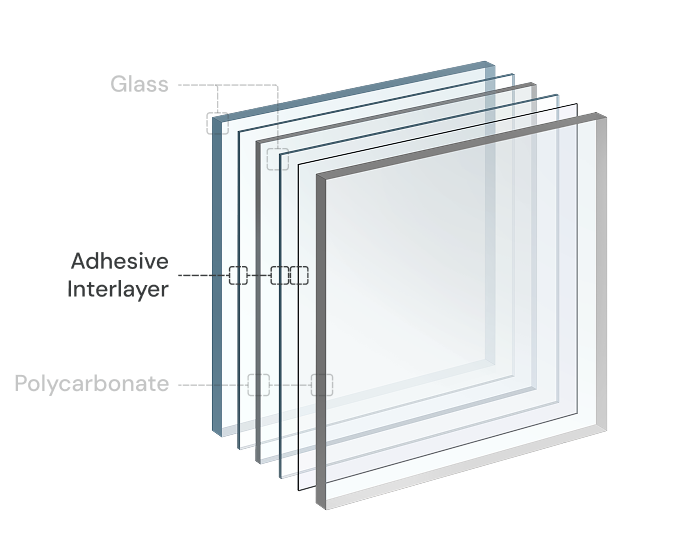
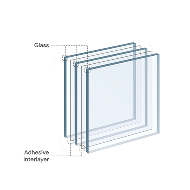
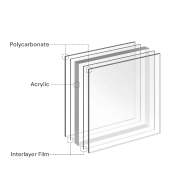
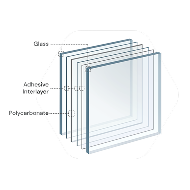
This no spall bullet-resistant laminate is a combination of glass and polycarbonate layers bonded together with adhesive interlayers, offering the best of both materials.
The glass layer provides structural integrity and rigidity, while the polycarbonate layer absorbs the impact energy, and the polycarbonate layer on the interior surface (or protection side) of the unit that prevents spalling.
The benefits of Glass Clad Polycarbonate laminates include excellent bullet-resistance, no spalling, and improves resistance to forced entry. It is commonly employed in applications like banks, police stations, government buildings, and military installations.
Make-Up Features
Glass
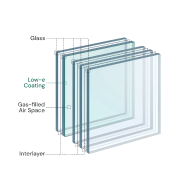
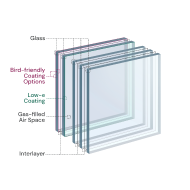
The glass layers ensure structural integrity and rigidity. On impact, glass flattens bullets, reducing velocity and dispersing energy. Thickness, treatment, and layering vary by product. Options include tints, reflective, bird-friendly, low-e, and low iron.
Polycarbonate
Thompson utilizes an optical grade Polycarbonate, a thermoplastic material known for its clarity, durability and strength. They are responsible for absorbing and dispersing the energy of the bullet or projectile upon impact. Compared to a regular glass product, Polycarbonate’s strength makes it less likely to shatter upon impact which is an essential factor in the performance of the glass and the application. The exposed polycarbonate layers have an abrasion resistant coating on its surface for the purpose of providing excellent abrasion and chemical resistance. Take special care and follow specific instructions when cleaning polycarbonate as permanent damage may result if cleaned incorrectly.
Adhesive Interlayers
Thompson uses high optical grade thermoplastic polyurethane (TPU) to bond multiple layers of acrylic and/or polycarbonate. The interlayers act as the “glue” that hold the various layers together. TPU is known for its adhesion, flexibility and ability to absorb impact energy, making it appropriate for use in bullet-resistant glass constructions.
Ballistic Protection
The below chart refers to how much ballistic protection the Thompson Innovative Glass product provides, based on standardized testing. In the U.S., bullet-resistant glass is rated by UL 752 the standard for bullet-resistant materials set by Underwriters Laboratories (UL).
It defines testing methods and performance criteria for bullet-resistant glass, doors, panels, and other protective materials. and classified into a range of levels.
 .357 Magnum Pistol
  .357 Magnum Jacketed Lead Soft Point
  .44 Magnum Pistol
  .44 Magnum Lead Semi-Wadcutter
  .30 Caliber Rifle
  .30 Caliber Lead Core Soft Point
  7.62 Rifle
  7.62mm Full Metal Copper Jacket Military Ball
  5.56 Rifle
 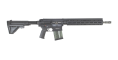 7.62 Rifle
 Get Expert Guidance on Defender Glass
Check with the Thompson Innovative Glass team for more details and options from our Defender line to find the right one for you and your application.

Options

Tints
Available tints include a variety of grays, bronzes, blues, and greens. Contact Thompson Innovative Glass for more specific details and samples.

Reflective
Thompson Innovative Glass carries reflective glass with varying performance & reflectance. Contact us for more specific details and samples.

Bird-Friendly
Thompson Innovative Glass offers a full range of bird-friendly glass options.

Low-E
We have Low-emissivity glass with varying performance. We can find the right one for you. Contact us for more specific details and samples.

Low Iron
Thompson Innovative Glass offers “low iron” glass, which has reduced iron content for a lighter blue edge and higher light transmission. Contact us for more specific details and samples.
Applications-Security and Protection
Bullet-resistant and forced entry glass are critical components in protecting people and property across a wide range of high-risk environments. These specialized glazing solutions are trusted wherever enhanced security and peace of mind are essential, from public institutions to private facilities. Common applications include:

Government Structures
Federal and municipal buildings require protective glazing that supports security mandates while upholding civic transparency and design intent.

Guard Shacks
Guard booths require bullet-resistant and forced-entry glazing to ensure the safety of personnel monitoring entry and exit points.

Police Stations
Bullet-resistant glazing improves the safety of officers and administrative staff at police stations, providing a barrier against potential attacks and creating a safe environment.

Transportation Hubs
Bus, train, and transit stations need high-performance glass for public safety, blast mitigation, and clear communication in high-traffic zones.

Hospitals
Healthcare environments use safety and security glazing in patient rooms, lobbies, and sensitive areas to enhance protection and hygiene without sacrificing light or openness.

Financial Institutions
Banks and financial offices rely on secure glazing for transaction windows, teller areas, and entry points to protect employees and assets.
Maximum Size

Maximum size for GCP – No Spall
72″ x 130″
Your Guide to Bullet-Resistant Glass Options
Discover all bullet-resistant glass options in our brochure.
Download Now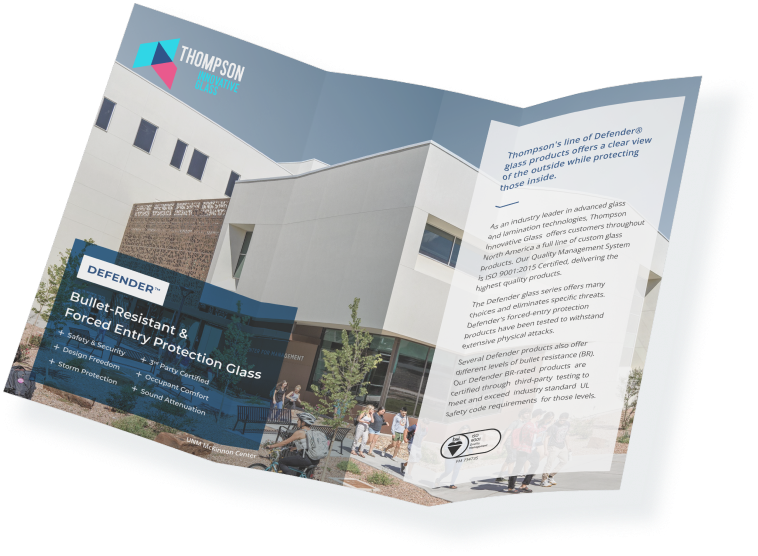
Frequently Asked Questions About Bullet-Resistant Glass
What does “no-spall” mean in bullet-resistant glass?
Spalling refers to fragments that can break away from the protection side of glazing following an impact. Thompson’s No-Spall GCP construction places a polycarbonate layer on the interior, or protection side, to help prevent this fragmentation while the overall glass/polycarbonate construction absorbs and disperses the projectile’s energy.
What are the advantages of Glass Clad Polycarbonate construction?
No-Spall GCP combines the benefits of two materials: glass provides structural integrity and rigidity, while optical-grade polycarbonate helps absorb and disperse impact energy. The result provides excellent bullet resistance, no-spall performance, and improved resistance to forced entry, making it well suited for applications such as banks, police stations, government buildings, and military facilities.
What ballistic protection levels are available with Thompson No-Spall GCP?
Thompson offers No-Spall Glass Clad Polycarbonate configurations tested to UL 752 Levels 2, 3, 4, 5, 7, and 8, providing options for a range of handgun and rifle threats. Thompson can also incorporate options such as tints, reflective glass, Low-E coatings, low-iron glass, and bird-friendly solutions depending on the project's requirements.