Inmate Housing Units
Secure jail cell windows and doors.
Thompson Innovative Glass manufactures Defender Detention Facilities Glass for correctional and high-risk environments. Engineered for strength and durability, our glazing solutions provide reliable protection without compromising visibility.
Detention glass and correctional facility windows are designed for maximum security, impact resistance, and durability to withstand forced entry, assaults, and contraband smuggling. This specialized glazing enhances safety, visibility, and compliance with ASTM 1915 security standards, making it ideal for high-risk areas such as jail cell windows, control rooms, and visitation areas.
Glass and glazing for detention and correctional facilities manufactured by Thompson Innovative Glass are designed to provide high levels of security, durability, and protection while maintaining visibility and light transmission.
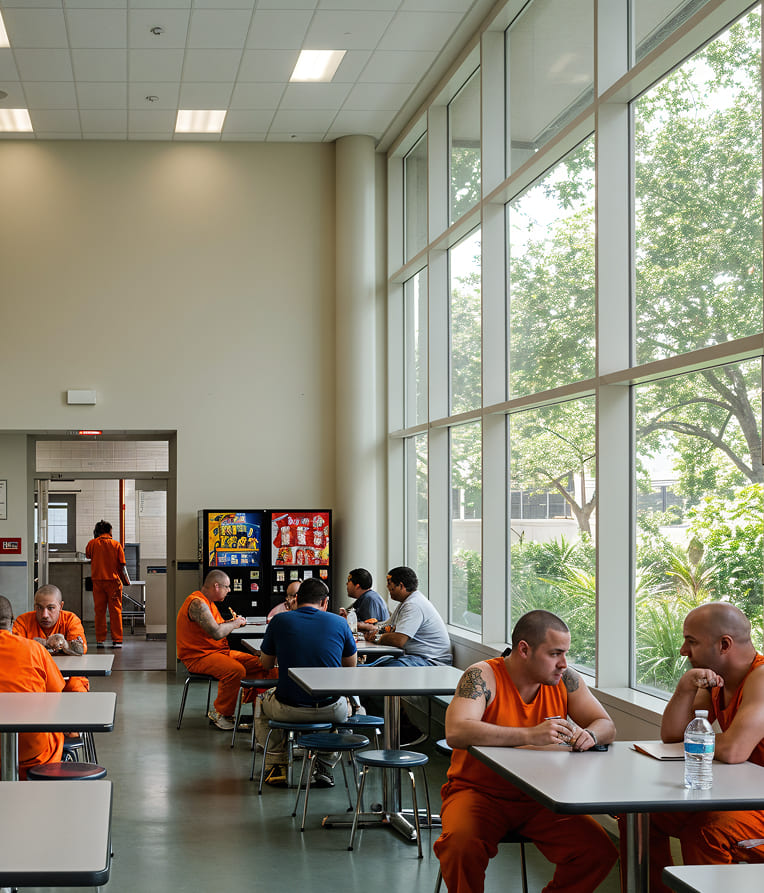
Engineered to withstand physical assaults, including blunt force, sharp objects, and prolonged attacks.
Often (but not always, make sure you check the make-up) meets UL 752 standards for bullet-resistant glazing, with different levels available depending on the threat level.
Prevents the passing of items through broken glass or joints.
Some glazing options include fire-rated properties to comply with safety codes.
Many detention-grade glass systems incorporate polycarbonate layers to prevent spalling (glass shards breaking off upon impact).
Helps control noise levels within facilities.
Protects staff, inmates, and visitors from attacks, escapes, and contraband smuggling.
Allows correctional officers to maintain clear sightlines while ensuring security.
Built to withstand abuse, reducing maintenance and replacement costs.
Can be tailored to specific threat levels (impact, bullet, forced entry, blast resistance).
Meets ASTM 1915 test method for evaluating the force entry resistance materials used in detention and correctional facilities.
Secure jail cell windows and doors.
Protective jail visitation glass for inmates and visitors.
Bullet-resistant glazing for protection.
Reinforced glass for external threats.
Safety glazing to prevent self-harm.
Detention-grade glass is specifically engineered for high-security environments, offering superior resistance to impact, forced entry, and ballistics. Unlike standard glass, it often incorporates laminated layers, polycarbonate interlayers, or reinforced materials to prevent breakage and spalling (dangerous glass shards).
Correctional facility windows rely on a few common types of security glazing:
While no glass is completely "unbreakable," detention glass is designed to resist breakage and prevent penetration. Some variations will crack but remain intact to maintain security. The level of protection depends on the glass construction and rating.
Not necessarily. Bullet-resistant glass is typically used in control rooms, sally ports, prison visiting room glass installations, and entry points where firearm threats are a concern. Lower-security areas may use impact-resistant but non-bulletproof glazing.
It is tested against various industry standards, including:
UL 752 – Bullet resistance (rated from Level 1 to Level 8- See our Defender® product line).
ASTM F1915 – Forced entry and attack resistance.
NFPA 80 – Fire-rated glazing compliance.
ASTM F1233 – Glass security glazing classification.
Yes, but it depends on the application. Laminated glass with polycarbonate layers is often used in jail cell windows to prevent self-harm while maintaining visibility for monitoring.
By using multi-layered laminated glass or polycarbonate, the glazing remains intact even if struck, preventing inmates from creating openings to pass objects through.
Yes, security glass can include tinted, frosted, or one-way vision coatings to allow correctional officers to monitor inmates without inmates seeing out.