Need more information?
Find out what Eastman FlySafe 3D can
do for your project.
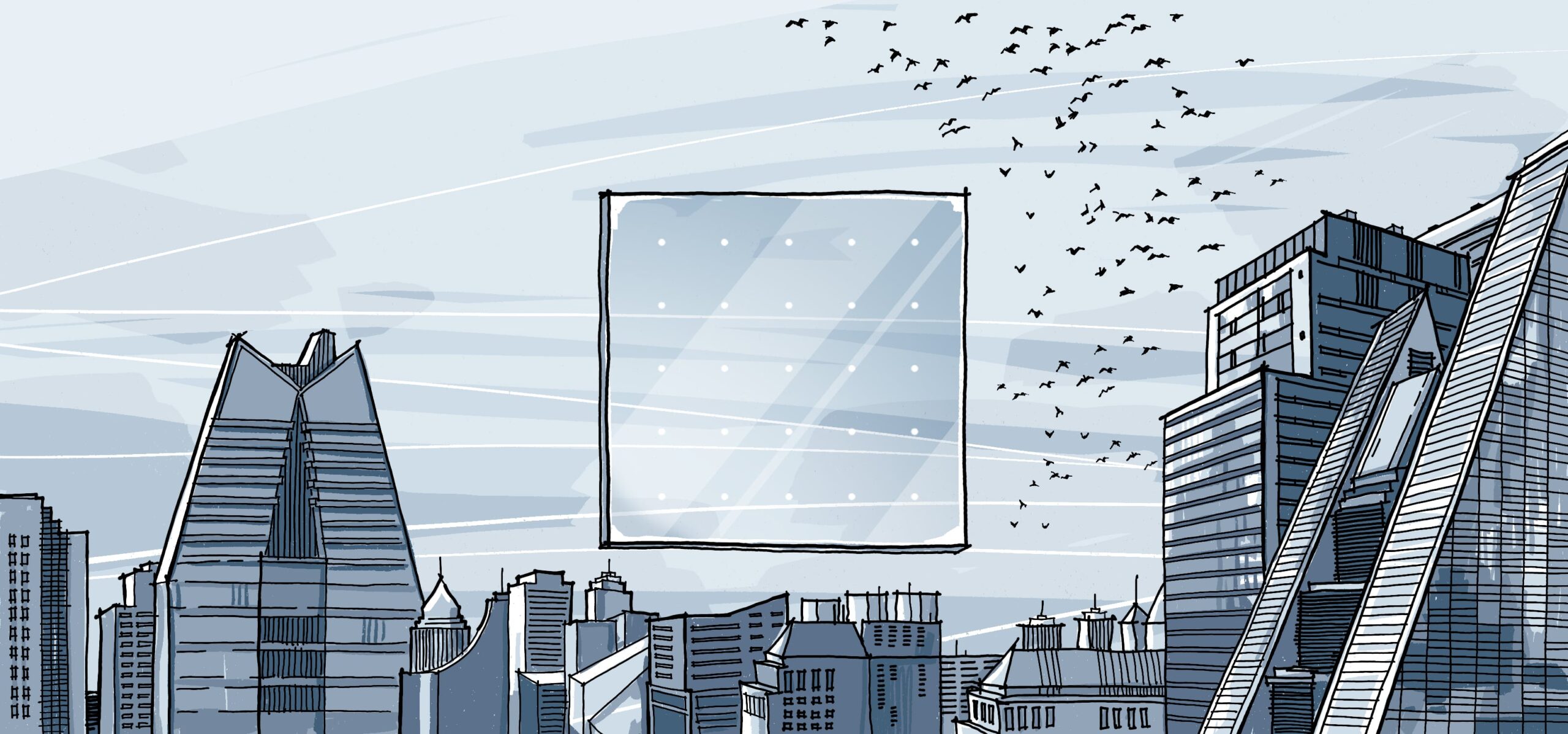
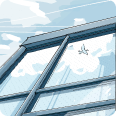
FlySafe™ 3D by Eastman is unique in the way its proven patterns to prevent bird collisions are created. 3D sequins are embedded in the PVB interlayer that catch the light and produce subtle twinkles.
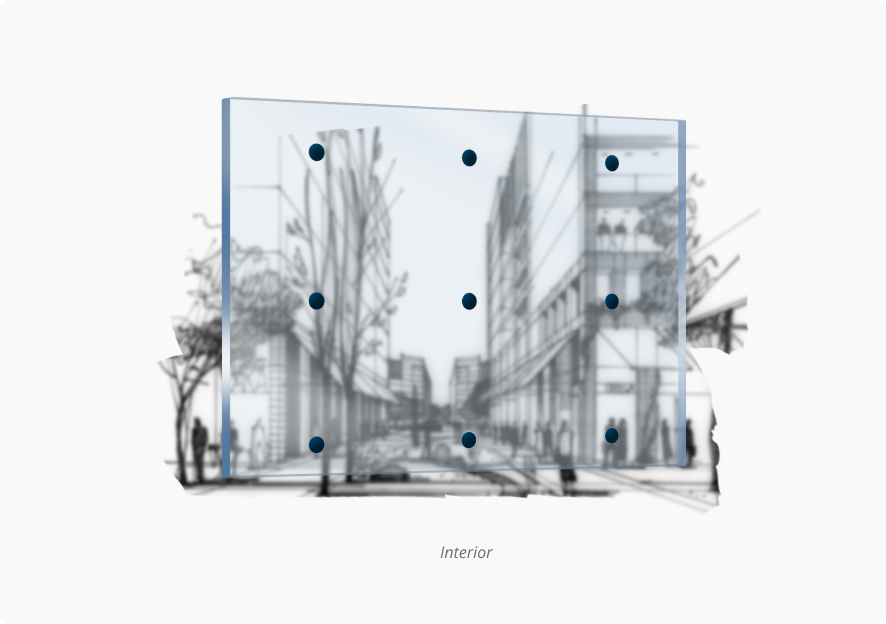
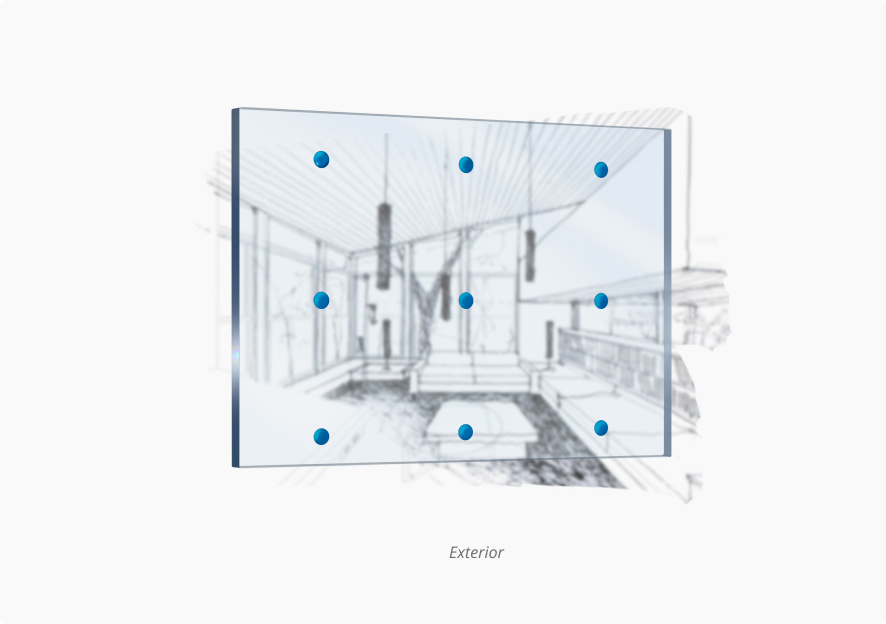
Eastman FlySafe 3D is unique in the way its proven patterns to prevent bird collisions are created. 3D sequins are embedded in the PVB interlayer that catch the light and produce subtle twinkles. This interlayer’s high effectiveness in mitigating bird collisions enables architects and glass laminators to meet bird-friendly regulations without compromising on safety, security, structural integrity, aesthetics, UV screening, or acoustic control.
The pattern is 3.5” x 3.5” (90mm x 90mm) with sequins that are 3/8” (9mm) in diameter.
Find out what Eastman FlySafe 3D can
do for your project.
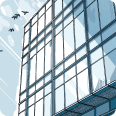
Specifications vary for bird-friendly glass; that’s why Thompson Innovative Glass offers one of the largest ranges of products available in the industry. We also offer the following options:
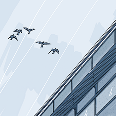
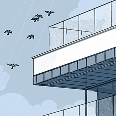
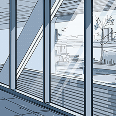
Discover all bird-friendly glass options in our brochure.
Download Now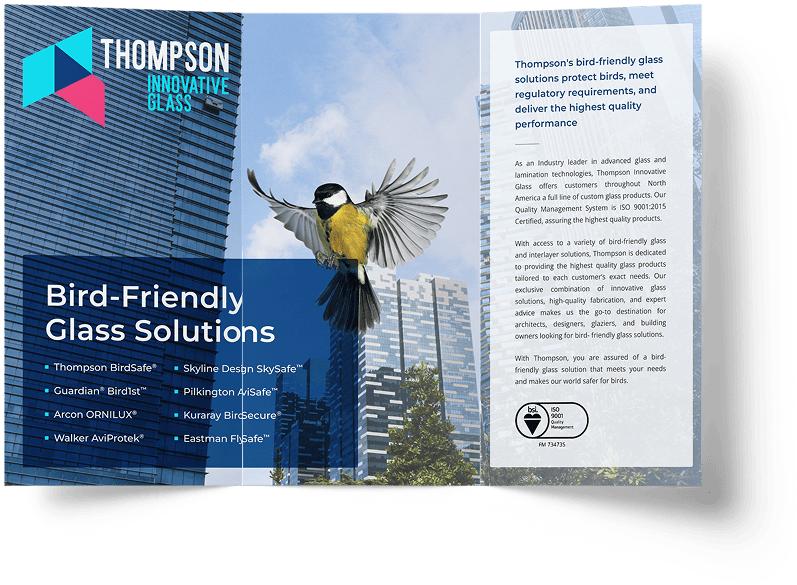
FlySafe™ 3D incorporates three-dimensional sequins directly into the PVB interlayer. The sequins catch the light and create subtle twinkles that help birds recognize the glazing as a barrier, reducing the risk of collisions.
Rather than applying a pattern or coating to the glass surface, FlySafe™ 3D places the bird-friendly markers within the laminated glass interlayer. The standard pattern measures 3.5" x 3.5" (90 x 90 mm) and uses 3/8" (9 mm) diameter sequins, providing an integrated bird-friendly solution with a distinctive but subtle appearance.
Yes. FlySafe™ 3D is designed to provide bird-collision mitigation without compromising important laminated glazing characteristics such as safety, security, structural integrity, aesthetics, UV screening, and acoustic control. This makes it a versatile option when a project needs to address multiple performance requirements within the glazing system.